

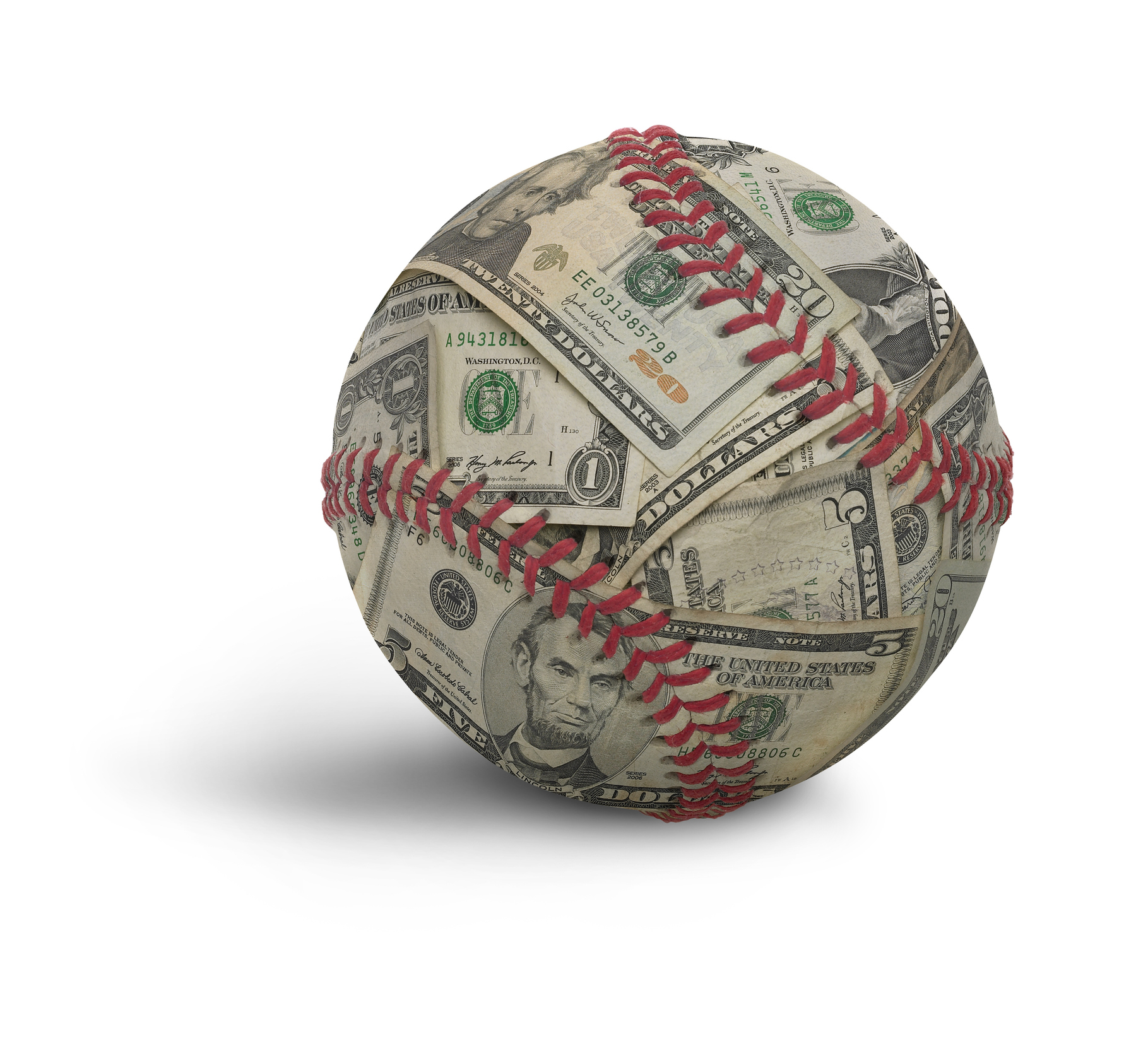
In recent months, there has been significant discussion surrounding the end of Major League Baseball’s (MLB) Collective Bargaining Agreement (CBA), which will occur later this year on December 1st. With rising parity in payrolls throughout the league, particularly in relation to the recent spending of the Los Angeles Dodgers and New York Mets (and the Dodgers’ subsequent success), there is a fear that MLB owners will lock out their players. This, rather than a players’ strike, means that each team is effectively not operating, putting games (and player salaries) for the 2027 season at risk. For a league that has experienced positive shifts in so many different ways over the last few years, particularly related to fan experience and engagement, this possibility could represent a real potential challenge to retaining that momentum.
In the aftermath of the Steroid Era (running from approximately the mid-1990’s to the mid-2000’s), pundits often stated that the period saved baseball from the 1994-95 players’ strike that resulted in the first cancellation of the World Series since 1904. The sense at the time was that, without the Steroid Era, many fans would have disappeared and maybe never returned, leaving MLB with significant revenue losses and a bleak future. This characterization put in stark terms the impact of the labor dispute. Described in ways that sometimes mirrored the characterization of Babe Ruth’s transformation of the game in the 1920’s through the promotion of the power game, the overwhelming, stunning power of Steroid Era players was seen as reinvigorating fans’ interest in the sport in the late 1990’s. Now, similar concerns that fans, particularly ones that only recently began to engage with MLB, will abandon the sport are very real. If a stoppage occurs, MLB must figure out ways, as they did in the wake of the 1994-95 players’ strike, to re-engage their audience, which could be very difficult.
In the aftermath of the Steroid Era (running from approximately the mid-1990’s to the mid-2000’s), pundits often stated that the period saved baseball from the 1994-95 players’ strike that resulted in the first cancellation of the World Series since 1904. The sense at the time was that, without the Steroid Era, many fans would have disappeared and maybe never returned, leaving MLB with significant revenue losses and a bleak future. This characterization put in stark terms the impact of the labor dispute. Described in ways that sometimes mirrored the characterization of Babe Ruth’s transformation of the game in the 1920’s through the promotion of the power game, the overwhelming, stunning power of Steroid Era players was seen as reinvigorating fans’ interest in the sport in the late 1990’s. Now, similar concerns that fans, particularly ones that only recently began to engage with MLB, will abandon the sport are very real. If a stoppage occurs, MLB must figure out ways, as they did in the wake of the 1994-95 players’ strike, to re-engage their audience, which could be very difficult.
While baseball has had some significant work stoppages, it is far from the only sport forced to deal with this issue. The NBA, NHL, and even NFL have also all had games impacted by such financial disagreements over the last 40 years. Whenever a work stoppage occurs, stakeholders become concerned about the negative impacts that will potentially result. As described above, there is often fear that fans will stop following the given sport, while another potential consequence is that the league and its franchises will lose value. These are presented as situations that are not only important in the present, but that will also have long lasting impacts into the future.
Though this is a powerful narrative, one must ask if this truly the case. For a few select teams, there is certainly an impact. Take the Montreal Expos, who had the best record in MLB in 1994 and saw likely their best chance at a championship disappear with the cancellation of the season before seeing significant declines in attendance and ultimately a move to Washington D.C. for the 2005 season. Without the strike and in its place a potential deep playoff run, the organization and its marketing department could have capitalized on that success and potentially developed a strong, loyal fanbase that would have kept the team in Montreal.
But, looking more generally, a different story emerges. While there are certainly broad feelings of animosity from fans resulting from a lockout or player strike, these are often short-lived. For example, while there is alarm that cancelled games will lead to fans abandoning the league and its teams, data cited in a 2019 study by the City University of New York (CUNY) shows no impact on fan engagement following a work stoppage for NBA games; supporters become invested again as soon as play resumes. A similar trend occurred in the wake of the 2012-13 NHL lockout, in which teams actually saw increased attendance subsequent to the lockout compared to before it. In fact, teams that experienced a 90% or greater attendance rate at their games increased by 24% in the aftermath of the lockout. Further, as was the case following the NHL lockout of the 2004-05 season, such stoppages have the potential to actually bring about economic prosperity for the entire league. Due to resulting changes in the CBA that governs the operations of the league, improvements to the business model and product can change the direction of the organization. In this particular case, the new CBA included in-game rule changes that stimulated offense and increased financial parity among teams to enhance competition, among other adjustments. The result was that by the 2021-22 season, the league had seen more than a 250% increase in revenues from 2003-04, the year prior to the lockout.
Although no definitive conclusions can be drawn from the data given the fact that all sports-related work stoppages involve different sets of circumstances and individuals involved, historical information indicates that the long-term impacts of such events may be overstated. While any interruption to fans and the product they follow is understandably a frightening prospect, the reality is that fans are fans because they like the sport. Though there are certainly downsides to work stoppages, fans ultimately want to watch and to be entertained. Thus, there is less long-term risk associated with these lockouts or strikes than may appear at first glance. As was demonstrated in the NHL, change is also often a byproduct of these stoppages, a fact that should be embraced by league marketing departments. Opportunities exist in the wake of crises, both in marketing the league and in making the organization stronger as it moves forward.